Inventory templates
Inventory spreadsheet template for warehouse labels
Download a free CSV header template for warehouse labels. Choose useful inventory columns and add verified stock counts and locations in your spreadsheet.
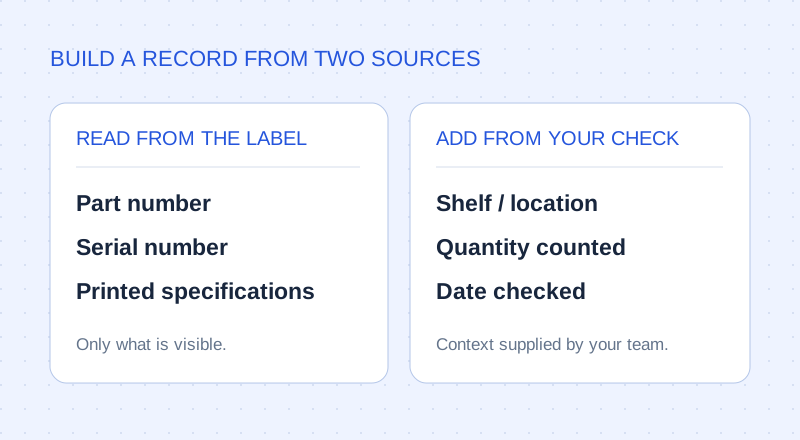
Separate what the label says from what you observe
A clear inventory sheet answers two questions: what is this product, and what do we actually have? Use label photos for the first. Use a physical check for quantity and location. One photo of a box does not establish how many boxes are on the shelf.
| Column | Where it comes from | Example |
|---|---|---|
| Item | Visible description; review extraction | USB-C power adapter |
| Manufacturer | Printed label | Example maker |
| Part number | Printed label; keep as text | 00018427 |
| Serial number | Printed label, if present | Leave blank if absent |
| Specifications | Printed attributes with units | 65 W |
| Location | Add after checking the shelf | A-03-02 |
| Quantity | Physical count; add separately | 12 |
| Checked on | Date of your stock check | 2026-09-13 |
Build the reusable export in TagQuill
The values above are a fictional worked example. Start your own file with the label-derived columns: Item, Manufacturer, Part number, Serial number and Specifications. Use the export builder to map your headings to the extracted fields and save the format. The downloadable template contains those headings only; it does not create location or counting features inside TagQuill.
- Download the blank CSV header template below, or use the column headings from your own destination file.
- Import those headings into the export builder and check each field mapping.
- Export a small set of reviewed records and inspect the file in your destination spreadsheet.
- Add location, counted quantity and check date there if needed. Reuse the saved export layout for future photo batches.
Twelve identical boxes: one row or twelve?
For twelve identical adapters sharing one part number, a stock list can use one product row with a manually counted quantity of 12. For twelve laptops that must be tracked individually, an asset register needs twelve rows with their separate serial numbers. Choose the row meaning before you start; photo count is not stock quantity.
If a destination system expects a particular template, use its required headers and value formats. TagQuill exports files; it does not automatically synchronise stock levels or push records to every warehouse or asset-management application.
Make the next batch fit the first one
Agree on one column order, one rule for identifiers and one way to write locations. Keep units alongside specifications: 230 without V is ambiguous. Review unclear values while the item is still available to photograph again.
Before merging another export, compare the intended matching key. A part number identifies a product type; a serial number can distinguish units. Retain the source photos and resolve uncertain matches before overwriting an existing row.
Start with a clean sheet.
A blank CSV header for your label records. Add the fields your team needs.
Download the CSV template ↓